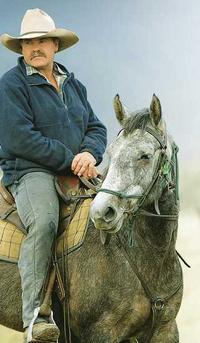
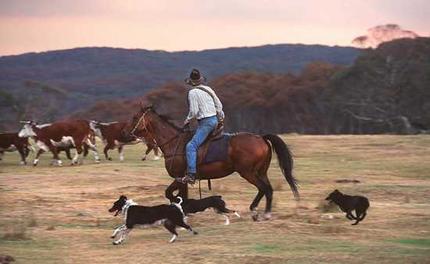
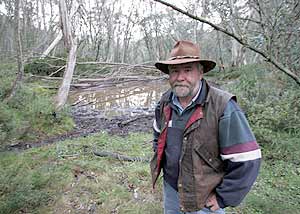
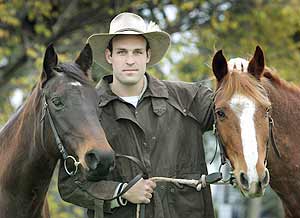
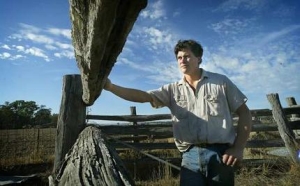
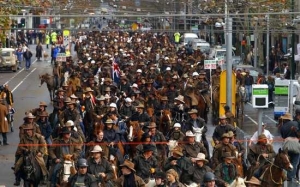
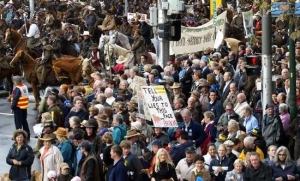
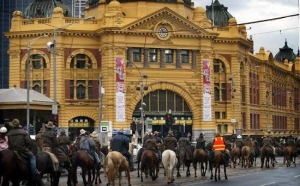
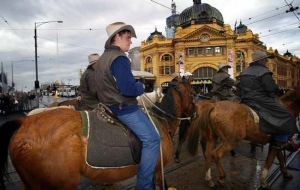
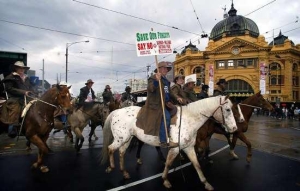
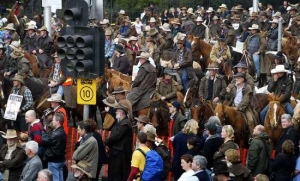
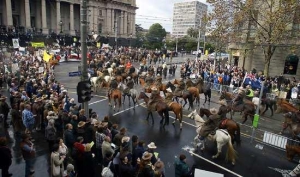
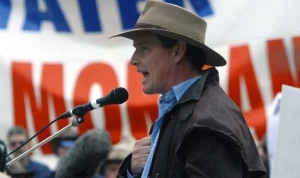
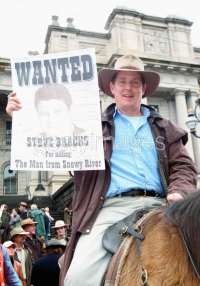
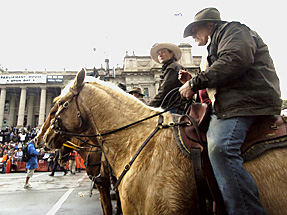
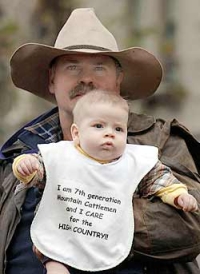
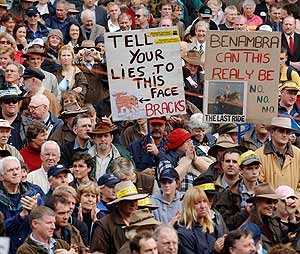
A fourth-generation farmer, McMillan, 27, has lived on the land all his life. But he is angered by what he sees as a city-centric Government "selling out" parts of the rural community. The Government’s recent decision to ban cattle grazing in the Alpine National Park was the catalyst for today’s rally but, for farmers such as McMillan, it’s not the only cause for concern.
"There’s the lack of drought relief funding, inadequate road infrastructure or the amount of red-tape bureaucracy we have to deal with. We’ve basically had it," he says. "These days, we have to get a permit for a dam, we have to get a permit to even burrow out rabbit warrens. I don’t know how you can farm with that much baloney."
Today’s rally will not be the first time the bush has taken its fight to the city. But this protest is slightly different, not least because of all the governments in Labor’s history, this one prides itself most on understanding the bush.
How it came to this
So how, then, did it come to this? Since winning government in 1999 with 12 nonmetropolitan seats (this later increasing to 17 seats at the landslide 2002 state election), the Government has come to regard the so-called "renaissance of provincial Victoria" as one of its best achievements.
The mantra is often repeated by Premier Steve Bracks and Treasurer John Brumby: with Labor in power, country Victoria has had record population growth. More than $220 million has been allocated to 99 regional infrastructure projects, building approvals are healthy and investment in education and health has never been better.
Yet 18 months out from the next state election, many farmers and country residents insist that the Bracks Government is losing touch with the country and warn that there could be ramifications at the ballot box.
The problem, they say, is partly based on Government policies — policies that critics claim ignore local knowledge or, worse, have fundamentally changed the way of life for many people who, in a time of drought, are already struggling.
Plans to place a toxic waste dump near Mildura, cost blow-outs and delays in the Regional Fast Rail project and wind farm proposals have all made headlines in the metropolitan press. But other niggling issues, such as road funding, wild dogs slaughtering livestock, or new child employment laws preventing children under 15 from working on the family farm without a permit, are also cause for concern.
Mountain cattlemen
Another problem is the way regional issues are handled by the Government and the perception that Spring Street “just doesn’t get it”. Take, for instance, the Government’s contentious decision to ban cattle grazing in the Alpine National Park (or the doctored newspaper advertisements that followed promoting the move).
Mountain Cattlemen’s Association president Simon Turner says Environment Minister John Thwaites called his home on the day of the announcement and left a message on his answering machine about 12.05pm. The decision — which Turner says stunned his group — was formally announced by the Government at a press conference 20 minutes later.
It’s the kind of stuff that riles country voters, Victorian Farmers Federation president Paul Weller told The Age. Weller admits things weren’t much better under Jeff Kennett. But he believes the current Government has turned its back and refuses even to listen to solutions put forward by those from the country.
'No support'
"It takes me, the president of the VFF, three to four months to see a minister now and that’s not being responsive to the needs of the community," he says. "(Country people) aren’t rated as a high priority, (the Government’s actions) speak for themselves.
"We haven’t seen support for the drought, we haven’t seen support for the roads. Their '99 commitment to standardise rail hasn’t been met, their ’99 election commitment that they would pay for half of the boundary fences that have been burnt out hasn’t been kept and they continue to ignore us."
Newly independent MP Dianne Hadden, who recently resigned from the Government in disgust over regional fast rail, toxic waste dumps and wind farms, agrees. Labor MPs reckon Hadden is bitter and had no choice but to resign after losing preselection support. But the symbolism of her departure is potentially damaging to the Government as it prepares for next year’s election. And her parting salvo — that the Government had become "arrogant, just like Kennett" — was scathing.
But Treasurer John Brumby, who travels around country Victoria at least once a week in his role as Minister for State and Regional Development, rejects suggestions that the Government has become complacent.
Drought aside, "the fortunes of country Victorians are remarkably different to those of a decade ago under the Kennett Government," he says. He cites the cabinet’s visits to regional areas as proof that ministers are listening and refers proudly to an 11-point plan from 1999 which listed all the things the Government had hoped to achieve in regional Victoria. Each item — from abolishing catchment management authority taxes and compulsory competitive tendering, to creating a regional infrastructure development fund and boosting employment — has been ticked off.
"In the 1990s, in a lot of these (provincial) areas, property prices were going through the floor, you had negative population growth, you had businesses going backwards," says Brumby. "Now there’s been a complete turnaround. It’s not that there’s no more to be done, and it’s not to say that we’ve done everything perfectly, but we’ve made provincial Victoria a key priority."
'Political football'
Bob Humphreys,however, is not so sure. Humphreys is the 61-year-old owner of Hallmark Oaks Pty Ltd, one of four remaining sawmills in Cann River, a small town 455 kilometres north-east of Melbourne.
A few years ago there were 16 mills in the timber town. Humphreys says the Bracks Government’s up to 22.4 per cent increase in timber pricing will mean an additional cost to his business of somewhere between $250,000 and $300,000 a year. This does not just mean the closure of his and other sawmills, he says, but the death of Cann River.
Humphreys says the Government normally negotiates a price increase, usually in line with the rate of inflation, but this year there was no consultation.
"We have been a political football for years. Every time the cake goes to the table they take another slice out of it and give it to the Greens," he says. "The Government only cares about what is going on in the city, forget that this will be the end of this little town."
On the other side of the state, about 50 local members of the Victorian Farmers Federation gathered at the Lake Bolac Hotel about a fortnight ago, 100 kilometres west of Ballarat. The rare sound of rain on the roof brought smiles to the farmers and the local leaders. Commodity exports to China, the skills shortage and ways to attract skilled migrants, and State Government-local government relations were all on the agenda.
'Rough roads'
Retired grains farmer Jim Hinton, from Carranballac near Skipton, was one of many farmers who attended the meeting. Hinton says the biggest concern for country people is the 'rough and potholed' roads that he deems to be unsafe. He wants the State Government to match the Commonwealth’s $2.7 billion Roads to Recovery program, adding: "We are one state and we are treated two different ways."
The question of whether the country tide will turn against the Government at next year’s state election may be a moot point. Swinburne University politics expert Brian Costar is not convinced that a "raging regional backlash" will take place at the ballot box. Issues such as the cattle grazing ban, for instance, only affect a small minority of voters, and "apart from being a bloody long way away ... Labor doesn’t hold any seats within cooee of the place," he says.
Costar believes that even one of the most pressing country issues — the proposal for a toxic waste dump — appears to be losing prominence in the metropolitan media, and there’s still 18 months to go before the November election.
"It’s very hard to defend landslide majorities like the one that the Government has got so you’d expect them to lose a couple of seats, and it could be likely that some may be in regional Victoria just by the sheer mathematics of it. But that doesn’t mean there’s some raging regional backlash," he says.
National Party leader Peter Ryan believes the discontent will remain. Too many people are disenchanted. Country people live by their word, he says, and Bracks has broken his. "It is a critical element of living and doing business. People see (the Government) as having breached that trust and they are angry about it."
Killing The Man From Snowy River
The story - for and against - regarding the Victorian Governments decision to ban cattle from grazing in the Snowy Mountains Alpine National Park.
ENOUGH’S ENOUGH  THE COUNTRY VOICE RALLY  Thursday 9th June 2005

Come and support the Mountain Cattlemen and put forward a united country voice against the end of alpine grazing.
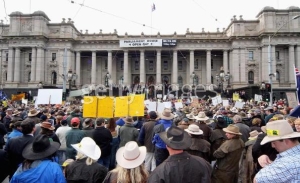
Noon at Parliament House
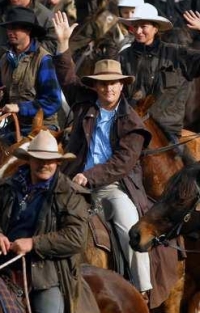
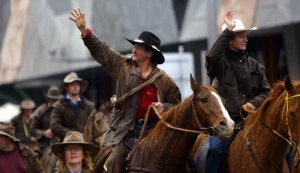
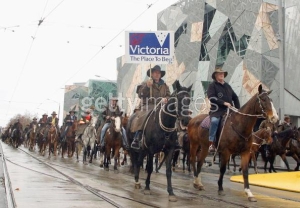
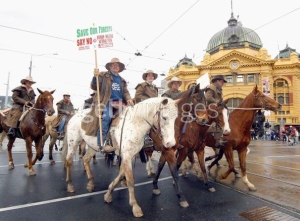
Riders will be departing the MCG Carpark at 11am and riding through the streets of Melbourne to Parliament House where they will join the masses at midday.

Those attending the rally should convene at Parliament House Gardens by 10.30am with the Rally and entertainment starting on the steps at 11am.
Below is a list outlining the timing for the rally and the Wed overnight camp.
Only well educated, quiet horses that are use to traffic and other horses will be allowed to participate. If horses and riders are deemed not to have the ability to rally, then they will be asked to leave their horses behind.
We strongly recommend people to take their horses into townships and populated areas to get them use to traffic, crowds, concrete etc.
Wednesday 8th June (overnight camp) 3.00pm onwards
Horse riders and those wanting to camp arrive at Gunbar Station, 566 Old Sydney Road, Beveridge for overnight camp.  If you are camping overnight, please call Bob or Scott (numbers below) to let them know numbers and for more information on the site and what you need to bring and a copy of the mud map.
Thursday 9th June (day of Rally) 5.00am – 5.30am
Horse floats to leave Gunbar Station for Vodafone Arena where horses will assemble for the rally.
10.30am – Mount up & get into formation.  Those not riding horses to assemble at Parliament House Gardens next to Parliament House, or along the route at Federation Square (ready to drop in walking behind the horses) – make sure you bring your placards, banners and families and wear your country clothes.
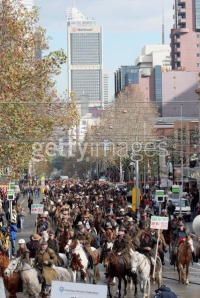
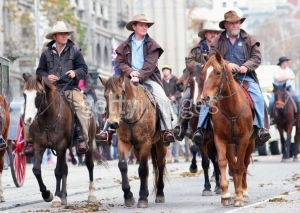
11.00am   Rally commences at Parliament House Steps with entertainment and speakers.  At the same time the horses will depart MCG Carpark under police escort along Wellington Pde, up Flinders Street,  right into Swanston Street and then turn right into Bourke Street where they will ride up to Parliament House.
NOON  Horses will arrive at Parliament House.  Assembled crowd to part and form guard of honour for mountain cattlemen.
1.30pm  Rally ends with horses riding back to MCG Carpark and people departing.
The man from Snowy River is no more.
Cattle grazing in Victoria's largest park -- the Alpine National Park -- will be banned forever when all existing 61 licences expire by June 2006.  Opponents have slammed the State Government's announcement, calling it an ideological sell-out that will destroy 170 years of tradition.

Below you will find news and web articles (in date order - oldest at the top) and links to more - on both sides of the story. Thank you to Tom Burlinson and Glenda Lovick for the information regarding this announcement and the rally.

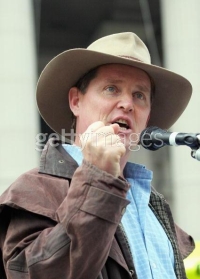
UPDATE: 11 June 2005 - I have added all the news articles and photos from the cattlemens rally in Melbourne on Thursday 9 June 2005 - including pics of Tom who lead the rally with Charlie Lovick and spoke passionately to the crowd.  Scroll down below and give the photos time to open up as there are quite a few. If you have already read the earlier articles - click HERE to go straight to the rally articles.

OTHER LINKS:
www.lovicks.com.au     http://www.alpinelink.com.au/news/
http://www.premier.vic.gov.au/newsroom
http://www.mcav.com.au  The Mountain Cattlemens Association Of Victoria.  The whole story.
http://www.abc.net.au/pm/  Article and Real Audio story.    http://www.abc.net.au/7.30/  7.30 Report ABC Transcript
http://www.bordermail.com.au/969111     http://www.bordermail.com.au/967599
http://www.abc.net.au/victoria/stories/s1381329.htm   Real Player Interview with Tom  http://www.abc.net.au/pm/content/2005/s1388795.htm  Interview 9/6/05
7.30 Report Transcript 21/6/05
The Age. Cattlemen to vacate national park.  By Melissa Fyfe. May 24, 2005.
Mountain cattlemen will no longer be able to let their stock graze in the Alpine National Park after a decision by the Bracks Government.
Most of the 61 licences will expire in August and not be renewed.
The State Government has offered more than $5 million to compensate cattlemen and improve the park.
The decision has been welcomed by environment groups and the National Trust, but condemned by independent MP Craig Ingram, who said the decision was a "dark day for small rural communities".
Premier Steve Bracks said the decision did not mean the end of alpine grazing, as cattlemen would still be allowed to run their cattle in state forests.
Environment Minister John Thwaites said: "This is the right decision. All the science for many years has indicated that cattle grazing is not consistent with a national park."
Sir Gus Nossal, microbiologist Professor Nancy Millis and the CSIRO's Dick Williams were at the announcement today to explain the scientific reasons behind taking cattle out of the national park.
The National Trust has argued that grazing puts at risk dozens of plant species, the headwaters of significant river systems and is inconsistent with the management objectives of a national park.
But mountain cattlemen maintain alpine grazing is a "critically important cultural link from the past to the future". It says it reduces fuel for bushfires, benefits tourism, helps monitor pest plants and vermin, and has community support.
It says the cattlemen "feel honour-bound to continue the great tradition of responsible cattle grazing started by their families and predecessors about 170 years ago".
But a CSIRO report last December found that grazing had no discernible impact on fuel loads.
The cattlemen say cows have an impact, but the high country is in excellent condition. They also point out that the country is not pristine, and this is true.
The human hand from aqueducts to ski fields to dams has changed the landscape.
In the drought periods at the turn of last century, between 20,000 and 40,000 sheep were grazed on the Bogong and Mt Hotham high plains.
The park also has a problem with wild horses, deer and rabbits.
As an environmental historian, Lawrence says historic photographs show most of the bog damage and vegetation loss happened in the 1920s and '30s.
Soil scientist Ken Rowe and alpine hydrologist and environmental historian Ruth Lawrence, both from La Trobe University, have studied how cattle reduce the reliability, timing and quality of water that flows down from the high country and ultimately to the state's food bowl.
Cattle expose bare ground, which increases run-off. This may seem like a good thing, but the water erodes the soil and reaches streams more quickly, making the catchment more "flashy", reducing water quality and increasing the risk of flooding in lower areas.
When the alpine bogs which hold 10 times their weight in water degrade, they stop acting like sponges that slowly release water year-round. This is critical to farmers who rely on water during summer. Cattle also urinate and defecate in the alpine streams.

Victorian Farmers Federation May 24 2005
Thwaites’ green agenda kills men from Snowy River
The man from Snowy River would turn in his grave at the decision by the Bracks Government to ban Mountain Cattlemen and cattle grazing from our Alpine National Park.
Victorian Farmers Federation President, Paul Weller, said farmers will fight Steve Bracks’ ban on Alpine grazing by appealing to the Federal Government to protect this important part of Australia’s heritage.
“The Government has turned its back on Victoria’s mountain cattlemen who have been an important part of the Alpine environment over many generations protecting this iconic environmental treasure from fire and pest weed infestation,” Mr Weller said.
Mr Weller said the government has succumbed to a radical ideological philosophy to lock the community out of forests and allow them to deteriorate with weeds and pests.“Farmers have no confidence in the politically dominated Alpine Grazing Taskforce which is merely a front for government MPs to hide behind to avoid responsibility for their decision to sacrifice cattlemen to curry favour with radical environmentalists,”
Mr Weller said.“The VFF strongly supports the rights of our mountain cattlemen to graze stock in the Alpine National Park as part of a sustainable forest management policy.”Mr Weller said the decision to ban Alpine grazing is the latest salvo what seems to be a Bracks Governments’ red tape and regulations war on farming. “
The grazing ban is up there with the Government’s ridiculous Child Employment permits, toxic waste dumps, workplace controls, restrictions on ripping rabbit burrows, the broken election promise to help replace Crown land boundary fences destroyed by bushfires and the 20 per cent budget cut to the share of road safety funding for rural Victoria,” Mr Weller said. Mr Weller rejected the Government’s claims cattlemen would be protected by allowing additional cattle in state forests, saying the ban is clearly the thin-end-of-the-wedge for the green campaign of complete removal of cattle from forests.
Uncertain future: Bruce McCormack says mountain cattlemen will make it difficult for the Bracks Government at the election.
Photo: Craig Abraham
The AGE. Head 'em up, move 'em out.  By Melissa Fyfe  May 25, 2005

Science finally beat the Man from Snowy River. The State Government announced yesterday that cattle grazing will be banned in the Alpine National Park.
Messing with a legend is a scary thing for any government. There's normally heady emotion involved, tricky arguments of culture and strong public opinions. And of all Australian legends, the Man from Snowy River is surely one of the nation's most potent and enduring.
It is to this totem of history - immortalised in Banjo Paterson's poem and the hugely successful film - that Victoria's mountain cattlemen have hitched their fortunes.
It is because of the romance of musters and the high country that these farmers have enjoyed widespread public support.
So when the State Government prepared to tackle this legend yesterday, they pulled out one of their own - Sir Gus Nossal, the face of Australian science. Sir Gus enthusiastically embraced the Government's decision to protect the Alpine National Park from further damage under the hoofs of cows."
This will annoy a small minority of people but a vast majority of thinking Australians will agree," he told the press conference.
But this unexpected appearance was not just about Sir Gus' approval. His presence was symbolic: the State Government has science on its side. Premier Steve Bracks and Environment Minister John Thwaites made the announcement yesterday not just with Sir Gus, but also University of Melbourne emeritus professor Nancy Millis, a highly-respected scientific heavyweight, and the CSIRO's Dr Dick Williams, an expert in alpine environments.
The scientific evidence on the damaging ways of cows has been well documented for more than 50 years. Paper after paper, report after report, it had now become almost impossible for the State Government to ignore. In 1957, the Australian Academy of Science recommended that as soon as possible grazing animals be excluded from high country heights above 4500 feet.
In 1998, Parks Victoria commissioned CSIRO senior principal research scientist Richard Groves to assess the scientific evidence.
He found it robust and said the persistence of grazing was "an indictment" on land management authorities and Parks Victoria.
During all of this the cattlemen complained bitterly of a green agenda, but things only got worse for them. Last year a study proved their claim that "grazing reduces blazing" was wrong.
Another study earlier this year found that one section of the Alpine National Park had 1.7 million cow pats on it (they can last for five years in an alpine environment).
Cows in alpine environments trample streambanks, springs and soaks and damage fragile alpine mossbeds. They are an erosion menace, creating bare ground and disturbing soil. They pollute alpine water and threaten alpine flora and fauna, of which 300 species are rare or threatened. They also spread weeds, which the State Government then spends hundreds of thousands of dollars trying to eradicate.
But there are several factors that have conspired to push the State Government into making this difficult decision now.
First, most of the cattlemen's seven-year licences expire in August. Second, it is impossible for the Government - so focused on the water issue - to ignore the most important reason to remove cattle from the park: it is the headwater to many major rivers, including the Murray.
Removing cattle will better protect delicate alpine bogs that have built up over thousands of years and act like large sponges, filtering and slowly releasing water down to the valleys in a seasonal, clean flow.
It was this reason that Mr Bracks and Mr Thwaites mentioned most often yesterday.
The other factor is the 2003 bushfires, which burnt 60 per cent of the national park and 77 per cent of the grazed area. A scientific body headed by Professor Millis recommended that cattle not be allowed in to the burnt areas above 1200 metres for at least 10 years. Regardless of any decision, it would have been a lengthy wait for the mountain cattlemen to get back into the park.
Cattle grazing was also becoming a costly exercise for the taxpayer.
The farmers paid $5.50 for each cow to spend the summer in the park, but this amounted to subsided agriculture. Parks Victoria, which was quietly rejoicing at the decision yesterday, was spending hundreds of thousands of dollars repairing alpine bogs, fighting weeds and managing the cows in the park. The announcement yesterday hinted at how costly this had become. The State Government will spend $650,000 on repairing damaged areas of the park, particularly mossbeds. If you take the entire $5.4 million package of compensation and park improvements, it adds up to a taxpayer payment of $675 per cow.
The taxpayer subsidies were starting to irritate other beef producers.
Prominent Gippsland beef producer Bill Bray told The Age yesterday that he supported the State Government's decision.
"The writing has been on the wall for some time, and they should have looked at their environmental impact some years ago," he said. "Other cattle farmers have talked to me about what a low amount they pay for the lease of the land and that's created some disquiet."
Yesterday afternoon, the mountain cattlemen were pondering the options available to them.
One is taking their horses to the steps of Parliament House, as they did in 1984. They will definitely appeal to the Federal Government for an emergency listing of the park and their culture on the National Heritage List - although this was rejected by the Federal environment department this year. The issue could become another state-federal battle if Federal Environment Minister Ian Campbell decides to take up the mountain cattlemen's cause.

Man in the saddle ponders: Is this the end of the trail?
For cattleman Bruce McCormack, news of the State Government's ban on cattle grazing in the Alpine National Park was like hearing that a family member had died.
"I'm lost for words," he said as he tended to the horses on his Merrijig property yesterday afternoon.
"I feel like someone has died".
As a fifth-generation cattleman whose family has been running cattle into the high country for 105 years, the ban on grazing in the park over summer marks the end of a treasured tradition.
"We've spent our whole life living and breathing the high country and now it's been taken away from us," he said. "The whole family is just gone, it's hard to imagine life without it.
"While driving the cattle up for the summer has been an annual ritual for as long as he can remember, McCormack is also concerned about losing the legend that goes with it.
"We are the so-called men from Snowy River. We've created that image through what we do with our horses and cattle up there," he said.
"We wear our hats every day of the week, we don't just put them on to go to a show once a week.
There's a man from Snowy River in every one of us and now it's gone."
McCormack said that legend was a part of his livelihood. As well as managing cattle, he has a horse riding business, offering tourists an insight into the Snowy River experience.
"It's never going to be the same going up there, I don't know if I'll continue with the trail rides," he said.
"To sit around the fire with people and tell stories about the cattle and what we do with them would just be lying. It won't happen now. We would just be pretending."
The prospect of closing the trail-ride business is just the half of it for McCormack. The ban on grazing will force him and son Adam to consider selling their 111 high country cattle. Either that, or lease more land near their property.
But with the worsening drought and the local sale yards nearing their end, he said keeping the cattle would be a gamble.
"We're not going to keep selling cattle for a living here if there's only going to be 20 people turning up to buy them," he said.
The State Government's compensation plan would help ease the financial stress of making such decisions, he said, but it wouldn't make it any easier to lose the family's connection with its history.
"It's not about the money anymore, it won't bring back the experience," he said. "People will have to read about us in library books somewhere."
While McCormack admitted he was better placed than many others to manage the financial implications of the ban, he was determined to keep fighting.
He remained hopeful that the Federal Government would approve an application to have grazing in the park protected under national heritage laws.
"Ian Campbell said pre-election that he'd back us on the heritage listing ... So we might be able to overturn the state decision at a federal level. That's where we are now," he said.
"Other than that, we'll just make sure we make it very difficult for the Bracks Government at the next election. They don't care about country Victoria, they proved that today." - Julia Medew

Making of a mountain legend
1830s Mountain cattlemen begin their summer muster of cattle to Victoria's high country.
1890 AB 'Banjo' Paterson's The Man From Snowy River published.
1920s Grazing temporarily halted in Mount Buffalo National Park, finally terminated in 1952.
1957 The Australian Academy of Science recommends the complete exclusion of all grazing above 4500 feet.
1969 Cows banned from Kosciuszko National Park in NSW.
1982 The movie based on Paterson's poem is released.
1984 More than 300 cattlemen ride horses down Bourke Street, above, to protest against the formation of the Alpine National Park, fearing grazing may end.
1989 Cattle allowed to stay in the park; grazing licences extended from one year to seven.
2004 Taskforce established to look at the effects and future of grazing.
2005 Premier Steve Bracks says cattle will be banned from grazing in Victoria's Alpine National Park after current grazing licences expire.

What they said
FOR
AUSTRALIAN CONSERVATION FOUNDATION. Don Henry, executive director. "National Parks should be for people and not cattle that are damaging the sensitive water and ecosystems of the high country. The decision is a balanced one because it protects the Alpine National Park for the future, while allowing grazing to continue in some state forests and on private lands."
ENVIRONMENT VICTORIA. Marcus Godinho, executive director. "This is a national park, not a cow paddock. Cattle grazing in the park is not only destroying some of this state's most precious and endangered species but continued erosion is also threatening Victoria's major river systems."
NATIONAL TRUST OF AUSTRALIA (VICTORIA). Stephen Hare, chief executive. "What is apparent from extensive research is that grazing is causing significant damage - We believe that the tradition of the mountain cattlemen should continue, but in less environmentally sensitive areas elsewhere in the high country."
AGAINST
VICTORIAN FARMERS FEDERATION. Paul Weller, president. "The Man from Snowy River would turn in his grave at the decision by the Bracks Government to ban mountain cattlemen and cattle grazing from our Alpine National Park. The Government has turned its back on Victoria's mountain cattlemen."
INDEPENDENT MP FOR EAST GIPPSLAND. Craig Ingram. "I think you'll find that not only will the mountain cattlemen be devastated and very angry at this but also country communities right across Victoria will look on this very dimly and see it is a very dark day for natural resource management and small rural communities."
MOUNTAIN CATTLEMEN'S ASSOCIATION OF VICTORIA. Simon Turner, president. "This decision will force some of our members off their farms. It will be the end of the generational transfer of some farming properties that have had licences in the park area for 170 years. There will be fierce anger in the country over this decision."
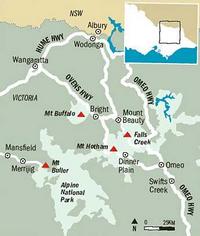
The Age. After 170 years, it's the last round-up. Date: May 25 2005. By Melissa Fyfe Environment Reporter
Victoria's Alpine National Park will be cattle-free next year. The State Government yesterday banned the 170-year-old tradition of grazing cattle in the fragile high country.
Premier Steve Bracks said he was swayed by decades of scientific evidence that showed cattle had damaged the park.
The decision brings Victoria in line with NSW, which banned such grazing 30 years ago.
The ban will hit about 45 operators, who muster 8000 cattle in the Alpine National Park each summer.
But Mr Bracks said the tradition of the mountain cattlemen would not die, as 10,000 cows could still be grazed in state forests. "The decision will benefit future generations who wish to experience the beautiful alpine areas," he said.
The move, while welcomed by green groups and bushwalkers, was immediately criticised as a blow to regional Victoria.
Story Picture: High country cattleman Ken Connelly rounds up his herd on the Bogong High Plains. Cattlemen fear their image and tradition will now be remembered only in museums.
The cattlemen said they feared their iconic image and tradition of The Man From Snowy River - a legend that opened the Sydney Olympic Games - would be remembered only in museums.
"Future generations will condemn this Government for killing off living history," said the Mountain Cattlemen's Association of Victoria's president, Simon Turner. "Environment Minister John Thwaites has plunged a knife deep into the heart of Victoria's history."
National Party leader Peter Ryan said: "Steve Bracks will go down in history as the man who killed the Man from Snowy River."
Mr Bracks said cattle grazing, not normally allowed in national parks, had eroded land, threatened endangered species, reduced water quality at the headwaters of Victoria's major rivers, and made the park less desirable for bushwalkers and tourists.
Regardless of yesterday's decision, a scientific panel had told the State Government that cows should not return for 10 years to areas burnt by the 2003 alpine fires, which are above 1200 metres.
Research had shown that cattle grazing had stopped the alpine park achieving national and world heritage listings, which the State Government would now pursue.
The Victorian National Parks Association's Charlie Sherwin said the decision gave "our children's children the opportunity to enjoy spectacular, healthy alpine landscapes swathed in native wildflowers". The National Trust welcomed the decision as a good balance of cultural and natural heritage.
Marcus Godinho, the executive director of Environment Victoria, said cattle grazing in the park was destroying endangered species. "This is a national park, not a cow paddock," he said.
The State Government will pay each cattleman $100 for each head of cattle per year over three years - up to $100,000.
More than $2 million of extra money will be spent on weed and pest animal control in the park, along with $650,000 for rehabilitation of the areas cattle have damaged, particularly the delicate and ancient moss beds.
A further $765,000 will be spent on cultural festivals, better signs of high country heritage, and historic hut maintenance.
The decision provoked anger in State Parliament, with Liberal leader Robert Doyle accusing Mr Bracks of breaking a Labor promise to mountain cattlemen that grazing licences would stay.
Outside Parliament, Mr Doyle said the ban was based on ALP policy, not scientific evidence.
He said the only reason Victoria had the national park was because mountain cattlemen had agreed in 1989 to give up their land on the "legislated promise" from the Cain Labor government that they would be allowed to continue grazing cattle in the park. "Now there won't be any 'man from Snowy River'," he said. "We might have photos, but we won't have the real thing. We are losing living heritage."
Federal Environment Minister Ian Campbell said he would consider an emergency national heritage listing, which the cattlemen believe would enshrine and protect their annual musters.
But the federal Environment Department had rejected a similar plea earlier this year.
Independent East Gippsland MP Craig Ingram said yesterday was a dark day for small rural communities, and that the $5.4 million State Government package to compensate cattlemen, boost tourism and improve the park was "buying out" somebody's heritage. "This Government got into power on the back of country voters," he said.
The decision would hurt the people to whom Mr Bracks owed electoral success in 1999, he said.
Mansfield-based cattleman Bruce McCormack said that while the ban would create financial difficulties for him, it could force others to abandon their farms.
"Some people are starting to say they will sell their cattle next week and get out," he said. Mr McCormack, who drives a herd of just over 100 cattle up to the national park every summer, said the compensation would help in the short term.
- With Paul Austin and Julia Medew
Alpine cattle ban slammed. May 25, 2005 From: AAP
THE Victorian opposition tonight condemned the state government's decision to end cattle grazing in Victoria's Alpine National Park.
The ban will come into effect after current grazing licences expire, the majority in August this year, although cattle will still be allowed to forage elsewhere in the high country.
Agriculture spokesman Philip Davis today said many values, traditions and heritage symbols of country life would "go down the gurgler because of Labor Party policy".
The government had broken a promise, given in parliament in 2003 by Environment Minister John Thwaites, that grazing licences would continue.
"This is another Bracks Government broken promise and another blow country Victorians will feel for many years," he said.
"Their children will never know, nor have an appreciation for the activities of their forbearers because Labor decided to wipe out 170 years of tradition and heritage."
The Nationals leader Peter Ryan earlier today said the parliamentary inquiry on alpine grazing was a sham because the government had decided its policy months ago.
"Steve Bracks will go down in history as the man who killed The Man from Snowy River," he said.
Mr Ryan said the decision attacked "the very heart of rural life" and showed Labor would "do anything to shore up support amongst the extreme Greens".
Herald Sun. Grazing bans kill a legend. Jeremy Kelly and Sarah Wotherspoon. 25may05
THE man from Snowy River is no more.
Cattle grazing in Victoria's largest park -- the Alpine National Park -- will be banned forever when all existing 61 licences expire by June next year.
Opponents have slammed the State Government's announcement, calling it an ideological sell-out that will destroy 170 years of tradition.
They will lobby the Federal Government to block the move.
Mt Beauty cattleman Harry Ryder said the decision would have a dire effect on his farm.
He said it was not just a lamentable decision for cattlemen but for all Victorians.
"Victoria has just become a little less interesting because that bit of history has been removed," he said.
But the State Government is citing science and a need to preserve the park from the damage caused by grazing as reasons for the ban, a view supported by environment groups.
Responding to the Government's Alpine Grazing Taskforce report, Premier Steve Bracks said yesterday grazing would be banned in the national park but would continue in Victoria's high country.
The 45 holders of the existing grazing licences will be paid up to $100,000 over three years in compensation to help them in the transition of their grazing practices.
The compensation will be handed out at the rate of $100 per cow each year for three years.
About 8000 cattle are currently allowed to graze in the national park with another 10,000 cattle permitted to graze in the surrounding state forests.
Mr Bracks said grazing in the national park threatened fauna and flora, and there was good reason to ban it.
The decision was backed by the Department of Sustainability and Environment's chief scientist, Sir Gustav Nossal, and the Scientific Advisory Panel, chaired by Professor Nancy Millis, which was set up in the wake of the 2003 bushfires.
The panel had earlier recommended grazing be banned from the national park for at least another 10 years to allow it to recover from the fires.
Nationals leader Peter Ryan said the inquiry was a sham and the Government was going to ban the grazing no matter what.
"Steve Bracks will go down as the man who killed The Man from Snowy River," Mr Ryan said. "There was no need to do this. I hope the green voters in suburban Melbourne are very, very happy."
Opposition Leader Robert Doyle said the move was not about science, but was a sell-out.
Victorian Farmers Federation president Paul Weller said the Man from Snowy River would turn in his grave at the decision and that the VFF would appeal to the Federal Government to help protect this important part of Australia's heritage.
Environment Victoria executive director Marcus Godinho said it was a fair and sensible decision.
But Mountain Cattlemen's Association of Victoria president Simon Turner said the decision was devastating.
Mr Turner said, however, that the decision was not the end and the association would keep fighting to ensure alpine grazing continued.
Herald Sun.  Dam fight in alpine war. Jeremy Kelly 26may05. Picture: Trevor Pinder
THE Bracks Government is under fire after using a contentious photograph to sell its controversial decision to ban cattle grazing in the Alpine National Park.
A dark image of cattle grazing at a dam above a lighter picture of a family wandering through the park was yesterday described by the Opposition as misleading.
Grazing licences in the national park will not be renewed when they expire mid next year.
The Government said the environmental impact of grazing was too great for it to continue.
Facing stiff criticism, the Government commissioned a $250,000 ad campaign arguing that cattle grazing in the national park was destructive.
But the Opposition said the photo of the cattle had been doctored.
"The advertisements in the daily newspapers feature a photograph of cattle which has clearly had its colour distorted to give the impression the cattle have turned the
No cattle problems: Charlie Lovick at the dam site.
surrounding bushland into a dark, desolate bog," said Opposition agriculture spokesman Phillip Davis.
The Herald Sun visited the contentious waterhole yesterday. It is a dam in the Alpine National Park but below the snow line, outside the most fragile alpine areas.
It is about 20m off a 4WD track, made to collect water and silt run-off and as a cattle watering hole.
Herald Sun photographer Trevor Pinder yesterday visited the site with cattleman Charlie Lovick, whose family's cattle have grazed the area for five generations.
Both said the area around the dam was pristine with no evidence of damage from cattle grazing.
The company responsible for putting the ad together -- house mouse design Pty Ltd -- said the photo had appeared exactly as it was supplied.
Graphic designer Miguel Valenzuela told the Herald Sun the Government knew the images it supplied were vastly different.
He said he was very happy with how the ad came out but the Government had now asked him to lighten the picture of the cattle for future ads.
Environment Minister John Thwaites said he was disappointed with how the ad came out.
Mr Thwaites' spokesman, Geoff Fraser, later said if the photo had been altered it was done without approval and after the minister had signed-off on it.
Opposition Leader Robert Doyle told Parliament the campaign was a dishonest use of taxpayer money to vilify the mountain cattlemen's way of life.
Media Release. Australian Minister for the Environment and Heritage. Senator the Hon. Ian Campbell. 26 May 2005
The man from Snowy River - a unique heritage under threat
The Minister for the Environment and Heritage, Senator Ian Campbell, has agreed to initiate an emergency listing assessment of the Alpine National Park under the National Heritage Act.
Senator Campbell today met representatives of the Mountain Cattlemen's Association of Victoria to discuss the Victorian Government's decision to unilaterally end 170 years of grazing in the Victorian high country.
"In light of the decision by the Bracks Labor Government to tear up the grazing licences held by these Australian families for six generations, I will be asking my department to provide an assessment on the emergency listing within 10 days," Senator Campbell said.
"I intend to hold the Victorian Government accountable for the protection of this unique part of our Australian heritage."
Under the Environment Protection and Biodiversity Conservation Act 1999, the Minister must make a decision on emergency listing within 10 working days.
"The Man from Snowy River is deep in the Australian psyche. This legend is part of Australia's heritage that simply cannot be lost. It should be noted that these 'men from Snowy River' work just 7900 cattle over an enormous high country area of 340,000 hectares - the equivalent of just one animal every 23 MCGs.
"We need an outcome that fully protects both the natural and cultural heritage values of the park," Senator Campbell said.
The Age. A battle for heritage. By Melissa Fyfe.   May 28, 2005

The horse is Kip. The young man is Adam. Here on top of Mount Stirling they normally feel at home. But this mountain cattleman now sees the high country as a place that may forget his traditions.
Adam McCormack and his father Bruce are still reeling from the State Government's ban this week on cattle grazing in the Alpine National Park. Adam, 23, a sixth-generation cattleman, said he had ridden on the family's annual summer musters to King River since he was "a little tacker".
"I'd like to have children myself one day and do the same thing - grow up and hand on the tradition," he said.
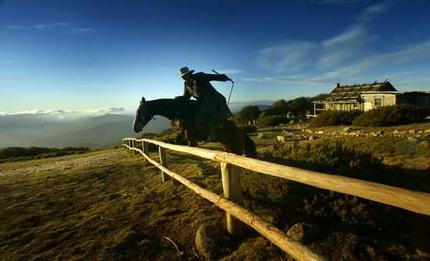
Craig's Hut, pictured behind Adam and Kip, was built for The Man from Snowy River film. Bruce McCormack was a rider in the cast.
Ask any conservationist and they will tell you that the cattle
Adam McCormack on Kip at Craigs Hut, Mt Stirling.
men's claim to national heritage listing is as genuine as claiming Craig's Hut is a real cattlemen's shack.
The man from Snowy River chased brumbies, not cows, says the Victorian National Parks Association's Charlie Sherwin. Many cattlemen now trucked their cows up to the summer pasture and two large licences were held by corporations, he said.
But this is what the argument will come down to: a battle of heritage. Which is more important: natural or cultural heritage?
For the McCormacks, there is a glimmer of hope. Yesterday they said they would be "happy enough" if they could get access to state forest, where 10,000 cattle - the bulk of stock grazed in the high country - can still feed.
State Environment Minister John Thwaites told The Age yesterday there was scope to consider extra licences in state forest.
The AGE. High farce in high country. May 29, 2005.   David Broadbent is Channel Nine's state politics reporter.

The ignorance of the difference between cows and steers created plenty of derision in Parliament, writes David Broadbent.
There has been a growing ripple of speculation over recent weeks about whether the Bracks Government is losing its collective political touch, judgement and skills.
Last week's extraordinarily clumsy attempts to sell the ban on cattle grazing in the Alpine National Park might not turn that ripple into a tsunami, but observers have been amazed that Australia's spin champions could get themselves into such a tangle on such a critical issue.
Some observers are also wondering whether the Government's best country asset, Treasurer John Brumby, has been too distracted by the budget and its aftermath to provide the benefit of his instincts to what could be a crucial communications campaign.
It is 20 years since the mountain cattlemen rode their horses through Melbourne's central business district in a devastatingly effective campaign against the Cain government's plans to create the Alpine National Park and ban grazing within its borders.
The protest was staged during the crucial Nunawading byelection and was the final straw in a campaign that saw the Coalition regain control of the Upper House. The park was created, but the battle to ban grazing was lost, and the defeat is still spooking Labor MPs with long memories.
How else can we explain the defensive mind-set behind the inept and wrong-footed campaign launched by the Government to sell its proposed ban on high-country grazing?
The Government insisted its decision to ban grazing in the Alpine National Park was based on overwhelming scientific evidence that cattle are steadily chopping up a unique and sensitive environment. NSW introduced its own ban on high-country grazing in 1972.
In Victoria "only 45 licensees" were affected and they would still be able to graze their cattle in state forests.
Days before the official announcement, selected journalists were briefed well enough to produce thoughtful backgrounders, and a host of experts were lined up to sell the decision.
Attitudes have changed since the cattlemen's 1985 protest rides and some believe The Man from Snowy River has lost some of his iconic potency. Nevertheless, the Government was nervous, and launched some of the most unconvincing and clunky advertisements anybody can remember.
The Melbourne radio spots were laughable, with a querulous suburbanite whingeing about the fact he can't hear his own voice above the noises of "cows" in a "national park".
The ignorance of the difference between cows and steers created plenty of derision in Parliament.
The newspaper advertisements were even more ludicrous, contrasting doctored pictures of ploughed-up watering holes with what looked like a scene from The Sound of Music. Instead of explaining the decision, the advertisements were perceived as a clumsy attack on living legends.
By Thursday afternoon about a dozen members of Labor's country caucus had had enough, and stormed into the office of Environment Minister John Thwaites to demand right of veto over all future advertisements. They've been assured a new campaign will be launched later in the year.
In the meantime National Party leader Peter Ryan is convinced the issue could be the "lightning rod" that unites a lot of small, so far un-co-ordinated, groups of disaffected country voters.
These include opponents of wind farms, victims of land tax, people disgruntled about delays to the overblown very fast train project and citizens of the 34 towns through which trucks laden with toxic waste will drive on their way to the proposed Nowingi dump.
As Bracks and Brumby know better than anyone in the state, country voters can change governments.
This is a classic political tussle where perception will be everything. Unless the Government can lift its efforts, it could unwittingly cobble together an extremely damaging coalition of country opponents.
PRESS RELEASE: 30 May 2005.  COUNTRY VOICE.  CATTLEMEN TO RALLY AGAINST GOVERNMENT BETRAYAL
The Mountain Cattlemen, with the support of a number of associated country groups, will hold a rally on Thursday June 9 at noon on the steps of Parliament House in Melbourne, to put forward a united country voice against the end of alpine grazing.  The horses will be departing the Olympic Park precinct at 11am, and will be met by a guard of honour at Parliament House at 11.30am.  
Last week, the State Government announced its decision to remove cattlemen from the Alpine National Park, effectively erasing 170 years of history.  This is despite earlier promises that cattle grazing would remain a legitimate activity in the national park.
“This is nothing short of a kick in the guts,” according to Chris Stoney, a third-generation cattleman and spokesman for Country Voice, the group representing the cattlemen.
“For two years, we have cooperated with the Government only to find that it had planned to do us over all along.  It is a decision driven purely by ideology and a hunger for Green preferences at the next state election, and has nothing to do with sound and sustainable land management,” Mr Stoney said.
“The compensation package promised by the Government is insulting to affected families, most of whom will receive less than half the speculated $100,000 the government would have us believe.
“After the decision was announced, the Government has undertaken a costly PR and advertising campaign to justify its actions, including hollow promises that cattlemen can move to forest leases, when that is simply not the case.  The so-called 10,000 cattle to be retained in state forests is a practical nonsense for most families, as the areas are directly adjacent to National Parks with only an invisible border between the two.
“This deception reflects the Government’s dismissive and arrogant attitude towards country Victorians,” Mr. Stoney said.
Hundreds will arrive in Melbourne on horseback to attend the rally, which will be addressed by political leaders and a host of celebrity supporters.  The star of “The Man From Snowy River”, Tom Burlinson, who is unable to attend the rally due to work commitments, has lent his support to the Country Voice campaign.
“The bush belongs to all Australians, and the High Country holds a special place in the hearts of people across the country,” Mr Burlinson said.
Country Voice has invited Victorians to march with them in expressing their opposition to a decision that seriously undermines Victoria’s proud rural heritage.
“This should be a warning for all country Victorians that this Government does not have their interests at heart.  We fear this is only the thin end of the wedge,” Mr Stoney said.
“One by one, it is picking us off.  The only way to tell this Government to pull its head in is to vote with our feet. United, we can stop it.”
The Canberra Times.  Mountain cattlemen face the final muster.  By Nick Lenaghan.  Monday, 30 May 2005
T HE MEN from Snowy River took last week what might be the most important ride of their lives.
They went to Canberra to win a reprieve for their 170-year-old tradition of alpine grazing through an emergency heritage listing under federal legislation.
They'll soon learn whether their appeal to Federal Minister for the Environment and Heritage, Senator Ian Campbell has been successful.
The mountain cattlemen say the Victorian Government's decision last week to ban cattle from the state's alpine national park will force some to abandon grazing businesses handed down from generation to generation.
The summer muster of cattle in Victoria's high country, which began in the 1830s, provides a livelihood for a relatively small number of rural families.
But it has fostered a powerful legend which resonates in the national psyche and was presented to the world at the Sydney Olympics opening ceremony. Banjo Paterson's 1890 poem put a brand on the myth and spawned two films in the 1980s.
So it was a bold move from a state government known for its slow but steady approach to ban grazing as the 61 licences expire this year and next.
Environmentalists, backed by a lot of science, say it's also a long overdue intervention to save the fragile alpine terrain from the trampling herds of cattle.
The state government will allow grazing to continue in state forest outside the park and has offered the cattlemen $100 per head of cattle over three years - up to $100,000 in total - to ease the transition.
But Bruce McCormack, whose family has been running cattle in the mountains since 1900 fears he may have to give up the 111 head of cattle he's licensed to graze, which is worth about 30 per cent of his income.
The summer muster is a way of life for a whole community, he says.
The trail rides he takes into the mountains have proven popular with overseas tourists, especially since the 2000 Olympics, but MrMcCormack doubts he has the heart to continue if the ban holds.
The 2003 bushfires, which devastated up to 80 per cent of the grazing areas in the national park, and the looming expiry of the licences set the scene for Premier Steve Bracks and Environment Minister John Thwaites to declare their hands.
Since the bushfires, only 800 cattle have grazed selected areas of the park, well down on the 8,000 head licensed, to allow the burnt areas to regenerate.
This year a scientific advisory panel, led by distinguished biologist Professor Nancy Millis, found the high country would need much longer to recover. It recommended cattle be kept out of the burnt areas for another 10 years.
Professor Millis said last week that the panel had found the burnt alpine areas were in a "serious detrimental state" and "recovery was going to be very complex and would be seriously prejudiced if grazing were permitted to return before at least 10 years".
Grazing was stopped in NSW in the 1960s and a century ago in the ACT.
Going back 50 years, research has accumulated showing the damage cattle cause by trampling through the headwaters of rivers, causing bare ground and erosion, eating wildflowers and leaving cow pats. Of most concern though are the unique alpine bogs containing moss beds which filter water and provide shelter for several threatened species. "Further damage by trampling is inevitable because the moss beds used to be protected by shrubs," Professor Millis said.
The evidence was enough to convince the state government not to the renew the seven-year licences.
After meeting the cattlemen, Senator Campbell agreed to initiate an assessment for emergency heritage listing and will give his answer early in June.
"This legend is part of Australia's heritage that simply cannot be lost," Senator Campbell said. That's enough to give the cattlemen hope that they - and their children - will be saddling up for summers to come and heading up into the mountains.
Herald Sun. Graziers losing the battle. Michael Harvey. 30may05
LAST-minute moves to allow cattle grazing in the Alpine National Park failed to persuade Steve Bracks to lift his controversial ban yesterday.
The Howard Government has less than a week to decide whether to grant an emergency heritage listing for alpine grazing.
Federal Environment Minister Ian Campbell is weighing submissions from cattlemen, the State Government and departmental officials.
But Mr Bracks confidently defended the Government's decision to rip up grazing licences.
Asked if he would fight any bid by Senator Campbell to impose emergency heritage listing, the Premier said: "I don't think we need to.
"Our legal advice says he can't under the Act so he'll have to make some extraordinary steps.
"Is the Federal Government saying: 'I'm going to force another jurisdiction to actually issue a licence'? These licences have expired."
The State Government wants to move cattle from the national park into state reserves.
Mr Bracks said his case was boosted by a Department of Environment and Heritage letter that had called for cattle to be removed from the park.
The Age.  Killing the Man from Snowy River.  John Schauble is an Age writer. May 31, 2005
Banjo Paterson liked his myths and so, it seems, do the friends of grazing, writes John Schauble.
The tussle for the tussocks in Victoria's high country - the debate about alpine grazing - seems to have little to do with the environment. It has become a battle about culture, not cows.
The television one-liner from Victorian National Party leader Peter Ryan that, in seeking to end grazing in Victoria's Alpine National Park, Premier Steve Bracks had "killed the man from Snowy River" was one indication of this. Another was the bizarre spectacle of federal Environment and Heritage Minister Ian Campbell galloping across the lawn at Parliament House in Canberra.
The struggle for Victoria's high country has become yet another skirmish in the history wars that have shaped political dialogue during the Howard years. Key questions of environmental protection and the economics of allowing grazing to continue have become lost in the mountains as the ideologues gather for the fray. The battle has become one of bush myth and iconography.
Ryan's response is interesting as it reinforces some widely held misconceptions about Banjo Paterson's famous poem. Australia's most popular poet, Paterson was also our finest myth-maker. "The Man" that Paterson describes was already a historical figure when the poet published his memorable lines in 1895. The horseman was a metaphor for the sort of figure Australians who, by the start of the 20th century, had largely retreated to the cities, wanted themselves to be.
The work itself has nothing directly to do with cattle grazing. It is a ballad about rounding up wild horses, a practice Paterson regarded as a sort of 19th-century extreme sport, "the grandest sport known in Australia".
Paterson certainly knew what he was talking about when it came to horses. As Nanette Mantle points out in Horse and Rider in Australian Legend, Paterson was a highly skilled and respected horseman. But he was also a romantic, a city dweller with a deeply nostalgic vision of the bush. Mantle concludes that by the time The Man from Snowy River was written, Paterson's nostalgia for the past had been "transformed and preserved as mythology".
But the story has mutated and been reinterpreted in film and TV versions that have nothing to do with the original, developing its own mythology beyond Paterson's creation.
Campbell's response is even more intriguing, not least because he brings considerable political clout to the debate.
The Victorian Government, on the basis of submissions put to it by interest groups concerning environmental, heritage, economic and social issues, has determined to end grazing in the national park, while allowing it to continue in other parts of the high country. The decision is well within Victoria's legislative powers and directly affects a small number of graziers.
Against the advice prepared by his department last year and submitted to the Alpine Grazing Taskforce, Campbell last week determined to intervene by initiating a process that could see the droving and grazing of cattle in the high country given emergency protection as a heritage activity.
While claiming impartiality, Campbell clearly has a view. "There is no doubt in any Australian's mind," he said last week, "that 170 years of Australians droving cattle up into the alps, letting them graze there and bringing them back down again at the end of summer is an absolutely central part of the Australian story."
In fact, it's about as remote from the more mundane truth of the Australian story as it gets. Even Banjo Paterson recognised that much in the lines of another ballad, Clancy of the Overflow, where he reflected on the dullness of urban life, "the foetid air and gritty of the dusty, dirty city".
Through the extraordinary act of mounting a cattleman's horse, the minister sought to become part of the imagery that has come to dominate this debate. Sadly for the environmentalists, the cattlemen win hands down with props. The imagery of horse, rider, Akubra and Driza-Bone is irresistible to the media. The best the environmentalists can offer are a few wildflowers and some sodden peat bogs.
The minister has allowed himself to become part of the illusion created by Paterson. The appeal to the Federal Government of aligning itself with the values espoused by the mountain cattlemen - independence, resilience, pitting man against nature - must be almost irresistible.
Forget the science or regard for the environment as something other than a resource to be exploited. The debate has been reduced to a level at which anyone who disagrees with the mythology can be tagged with the catch-all of "un-Australian".
Herald Sun.  Snowy actor to ride again.  01jun05
THE actor behind the Man from Snowy River, Tom Burlinson, will ride again.
He will lead a rally of mountain cattlemen on horseback to Victoria's Parliament House next week to protest against a ban on alpine grazing.
Other celebrities, including Stingers' Katie Kendell and AFL identities Billy Brownless, Tim Watson and Josh Fraser, will also join the June 9 ride.
Spurred by the move to shut cattle out of the state's alpine national park, the mountain cattlemen have formed a lobby group called Country Voice.
They say the ban will end a 170-year-old tradition of summer musters and destroy their way of life.
Chris Stoney, a third-generation cattleman and Country Voice spokesman, said the ban was driven by ideology and a hunger for Green preferences at the next state election.
"This should be a warning for all country Victorians that this government does not have their interests at heart," he said. "We fear this is only the thin edge of the wedge."
The state's mountain cattlemen have already recruited the Federal Government in their campaign to overturn the ban, including Environment and Heritage Minister Ian Campbell.
Last week, Senator Campbell said the summer musters were "an absolutely central part of the Australian story".
By law, the Environment Minister must decide by next week whether to issue an emergency listing allowing grazing to continue in recognition of its social and cultural heritage value.
The State Government has said its ban will not end the cattlemen's tradition because they will still be able to graze their stock in state forest areas.
The Weekly Times. City protest. PAUL SELLARS, DANIELLE LE GRAND and DAVID McKENZIE. 01jun05
Farmers take anger to Spring St
ANGRY farmers will protest in Melbourne next week over the ban on alpine grazing and other grievances.
Thousands of farmers are expected to converge on Parliament House on June 9 in support of Victoria's mountain cattlemen, who were last week locked out of the Alpine National Park by the Victorian Government.
But Victorian Farmers Federation president Paul Weller said the protest was also motivated by anger over a range of Victorian Government policies, from pest control and drought relief to road funding, water and the Child Employment Bill.
Disaffected groups will protest at the ``Enough's Enough Rally'' under the banner of Country Voice.
The Government's decision not to renew grazing leases has sparked outrage among cattlemen, their supporters and farming groups.
The Federal Government has also condemned the ban and is seeking to overrule it through an emergency listing of the cattlemen's heritage under the National Heritage Act.
Third generation cattleman Chris Stoney said the ban was ``a kick in the guts'' and it was time to rise up against the Government.
``One by one, it (the Government) is picking us off,'' Mr Stoney said. ``The only way to tell this Government to pull its head in is to vote with our feet.''
Mr Weller said farmers were sick of being ignored by the Government.
``The state has ignored us on drought. We now have to have permits for ripping rabbit burrows. They have ignored us on wild dogs,'' Mr Weller said.  ``The Child Employment Bill, (Port Phillip Bay) channel deepening has been put on hold (and) rail standardisation was a promise they never kept. ``They have refused extra funding for rural roads and (there is) a lack of funds for (the control) of weeds and feral animals.''
Cattlemen’s ride is for country Vic: Enough is enough!  Victorian Farmers Federation.  June 2 2005
The Bracks Government has forgotten there are people living beyond the tram tracks of Melbourne.
Victorian Farmers Federation President, Paul Weller, said rural people are doing it tough and a range of poor Government policies is only making life more difficult.
“Enough is enough and I call on rural Victorians to join the VFF and hundreds of mountain cattlemen at a rally in Melbourne next Thursday,” Mr Weller said.
Mr Weller said the purpose of the rally is to voice country Victoria’s frustration at the Bracks Government’s lack of support.
“The decision to ban cattle grazing in the Alpine National Park is just the start of a long list of sorry acts this Government has done to kill the country,” Mr Weller said.
“There has been no Victorian Government drought relief for farmers and nowhere near enough support for farmers to comply with the requirements in the Water White Paper, such as water metering.
“Country roads are falling into disrepair and there was no new money in this years’ Budget to make rural roads safer.
“We can’t rip a rabbit burrow without getting permission, and we’re about to get more ridiculous red tape to manage native vegetation on our farms.”
Mr Weller said the State Government needs to remember that Victorian farmers feed the world.
“In 2002/2003 Victorian farmers made a $7.5 billion dollar contribution to the State’s economy,” Mr Weller said.
“Farmers are also responsible for almost one third of Victoria’s total exports.”
Buses are being organised throughout Victoria to bring members to the rally. If you would like to join members on the bus, contact the VFF on 1300 882 833 or go to go to www.vff.org.au and on the home page click on “Cattlemen Rally” to find out where the buses will be coordinated from. Please note that buses will be available subject to demand in each region.
Members attending the rally are asked to congregate at Parliament House Gardens by 10.30am. Riders will depart Vodafone Arena at 11am and will join protestors outside Parliament House at noon.
The Herald Sun.  Cat's claws behind graziers.  Sam Edmund.  02jun05

GEELONG big man Brad Ottens has thrown his weight behind Victorian cattlemen.
The 25-year-old star forward came to the aid of the stricken mountain men yesterday as they faced life bans from grazing.
"I grew up in the Northern Territory, I'm from the bush and I just want the country to be heard," Ottens said.
Cattle grazing in Victoria's largest park -- the Alpine National Park -- will be banned forever when all existing 61 licences expire by next June.
The State Government last week cited science and a need to preserve the park from the damage caused by grazing as reasons for the ban, a view supported by environment groups.
Opponents have called the decision an ideological sell-out that will destroy 170 years of tradition.
Support: Brad Ottens has thrown his weight behind Victorian cattlemen.Picture: David Caird
More than 600 cattlemen and women on horseback are expected to march over the Bolte Bridge to the steps of Parliament House in protest on June 9.
Ottens said he fully supported the rally. The former Richmond player was born in Darwin and spent most of his childhood on the farming plains of the Northern Territory. Ottens' childhood home was a 240,000ha property 400km south of Katherine, where his father, Dean, and mother, Margot, ran 2000 head of cattle. Life on the property meant everyone had to grow up very quickly. Ottens learned to drive a car when he was five and, by nine, he was able to help with fencing and mustering, branding and injecting cattle.
Message from the Lovick Family.

As many of you will already be aware, the Bracks labour government has declared that cattle grazing will no longer be permitted in our Alpine National Parks. This devastating news was released on Tuesday, and has left us determined to fight what is essentially a politically motivated attack on a 170 year tradition in Victoria.

The Lovick family has been taking cattle into the bush since the mid 1800’s; over five generations of the family, and have in recent times we have shared the experience with guests and friends of our horse riding business. We have always maintained an active interest in the health of the bush ecosystem, and have been careful to manage the impact of our cattle in the bush.

The benefits of their presence have been ignored by the Alpine Grazing Task Force, which was commissioned to look into the impacts of grazing. We know that fire risk in the bush is minimised by cattle, and that they have been a part of this delicate system for so long that they are now an integral part of it.

Many articles have appeared in the media over the past week. One which features Charlie in the Herald Sun on Thursday, 26th of May exposes some of the dirty tricks employed by the government to support their $250,000 advertising campaign on the issue featuring doctored pictures of the high country. Clearly this is a huge and patronising waste of your taxpayer’s money!

So many of our loyal friends have been kind enough to phone and email over the past few days to show their support, and to ask what can be done about it. In answer to this question, we have a few suggestions for you.

Firstly, you can lobby your local member by writing, phoning or emailing them. Don’t be afraid to be a pest – this is the only way to get satisfaction! Make them respond, and don’t be put off by political grandstanding.

Secondly, write a letter to the editor of your local and national newspapers, and phone up talkback radio to take the opportunity to air your feelings about the ban on cattle. We need to get the message out to as many people as possible that this ban is unjustified by the scientific evidence of the Alpine Grazing Taskforce.

Thirdly, the MCAV has planned a rally to take place in Melbourne ON Thursday the 9th of June. We anticipate that this will be enormous, as there is such a groundswell of support for our cause. Imagine the impact of 1,000 people on horses, with a crowd of 50,000 people on foot. Such an event would certainly have an impact on the public conscience as well as on the political decision makers. Information about the rally is contained in a press release from the group Country Voice, which has been included at the end of this newsletter.

The support of each and every one of you is important – if you value the time you have spent with us in the bush, now is the time to stand up and be counted! We need every person to help by attending the ra